

Post-production is the phase after filming where your footage is transformed, through editing, sound design, color grading, and graphics, into a strategic, story-driven final video that’s ready to engage and convert your audience.
While the cameras may be off, the most important part of your video’s journey is just beginning. Post-production is where raw content is shaped into a cohesive message: where your goals, be it donor trust, internal buy-in, or mass visibility, start becoming reality.
Jungle Films sees post not as a technical task, but as the heartbeat of campaign success. It’s where brands gain clarity, nonprofits unlock emotion, and institutions finally feel seen.
If you’re ready to discover what really makes a video powerful, keep reading. We’ll unpack every stage of post-production, and show you how to do it right.
What Is Post-Production?
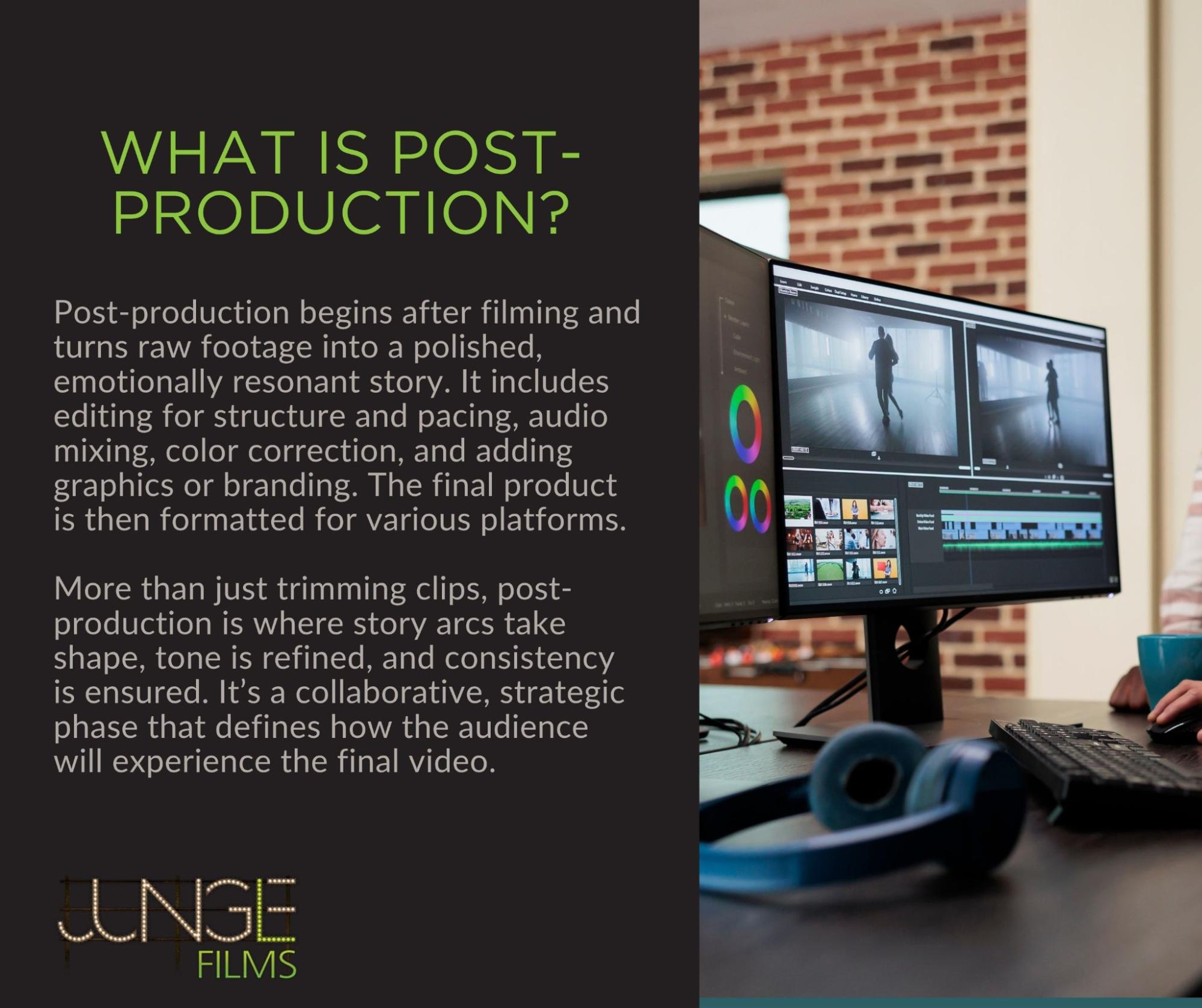
Post-production refers to the entire phase of a video project that begins once filming wraps. It’s where raw footage is shaped into a coherent, emotionally resonant story that’s ready for distribution.
This process typically includes:
- Video editing to shape narrative structure and pacing
- Audio mixing for clarity, emotional tone, and sound design
- Color correction and grading to unify visuals and convey mood
- Graphics, text, and branding integration
- Final formatting and exporting for various platforms
A common misconception is that post-production is a simple “cut-and-export” task. In reality, it’s the most strategic and emotionally nuanced part of the process. This is where story arcs are built, where brand tone is solidified, and where visual consistency and clarity are established.
Jungle Films prioritizes transparency, inviting clients into a collaborative, feedback-driven process so nothing is left to guesswork.
Film Production vs. Post-Production: Understanding the Difference
While both phases are critical, film production and post-production serve fundamentally different purposes and demand different skill sets.
Film production is about capture. It’s where the camera rolls, the interviews are conducted, and the visuals are recorded. It’s the raw material.
Post-production, on the other hand, is about curation and craft. It’s where all that raw footage is shaped into something meaningful, something that aligns with your brand voice, campaign goals, and audience attention span. This phase involves editing, color, sound, motion graphics, captioning, and final delivery.
Clients often ask, “Why does post cost more than filming?” The answer is simple: storytelling is not only about what you capture, but how you package and deliver it. A single minute of edited content can take hours of focused, skilled effort to perfect across multiple disciplines.
From shot selection to interview flow, Jungle Films anticipates how your story will come together long before we hit record. That foresight saves time, minimizes reshoots, and maximizes impact.
Is Editing A Part of Post-Production?
Absolutely, editing is not only part of post-production, it’s often considered its heartbeat. But editing alone doesn’t complete the picture. It’s the foundation of the post process, the moment when raw visuals begin to speak. Still, it’s only one part of a much larger orchestration.
What is editing, exactly?
Editing is the art and strategy of assembling footage into a coherent, emotionally resonant narrative. It involves:
- Selecting and trimming raw clips
- Shaping performance and pacing
- Weaving together interviews and b-roll
- Building story arcs and visual rhythm
- Laying the groundwork for everything that follows: sound, graphics, color
What editing tools do professionals use?
Jungle Films’ post team uses industry-standard software to sculpt each story with precision and polish:
- Adobe Premiere Pro for sequencing and timing
- Final Cut Pro for fast, agile cuts when speed matters
- DaVinci Resolve for editorial finesse and deep color control
Why do some edits feel “off” even when the footage is great?
Because editing is not solely about matching clips. It’s about tone, timing, and truth. An edit can feel rushed or flat, not because of technical failure, but because the emotional rhythm is missing.
Jungle Films’ editors are trained not cut, hear, and notice what’s unsaid, and what a client meant to say. This sensitivity is especially vital in interview-driven and testimonial content, where authenticity is everything.
So yes, editing is a core pillar of post-production, but it’s only the first step in turning a message into a movement.
Why Post-Production Is the Most Strategic Phase of Any Video Campaign
Too often, post-production is mistaken for a cleanup job, an afterthought to “fix it in post.” But the truth is, post is where the strategy of your video takes shape. It’s where raw footage is transformed into a story with purpose, precision, and emotional resonance.
Color Correction vs. Color Grading
These two are often confused, but they serve different goals:
- Color correction ensures visual consistency, matching exposure, white balance, and contrast across shots.
- Color grading goes deeper. It sets the mood, enhances storytelling, and aligns with your brand palette. It’s the difference between content that looks polished and content that feels cinematic.
Sound Design: The Unsung Hero
In emotionally driven video, especially in nonprofit or advocacy work, sound can carry more weight than visuals. A subtle swell of music, the crackle of atmosphere, a well-placed moment of silence: these elements can elevate the video and its message.
Graphics, Text, and Motion
Visual overlays like lower-thirds, title cards, transitions, and animated text aren’t decorative flourishes, they’re tools for clarity and cohesion. They:
- Guide viewer focus
- Reinforce messaging
- Increase accessibility
- Strengthen brand presence
Editorial Storytelling and Strategic Flow
Pacing, tone, and narrative shape aren’t discovered during the shoot, they’re designed during the edit. In post, we determine:
- How quickly should your audience feel something
- Where the emotional inflection points land
- What viewers remember (and what they don’t)
This is where your voice becomes the story.
Clients sometimes worry, “What if the editor doesn’t capture the feeling?”
A good post-production company immerses itself in your message before ever touching the timeline. Jungle Films edits with empathy, strategy, and the end goal in mind.
Because a powerful message is one that is built on intention.
Common Post-Production Steps (And Why Each One Matters)
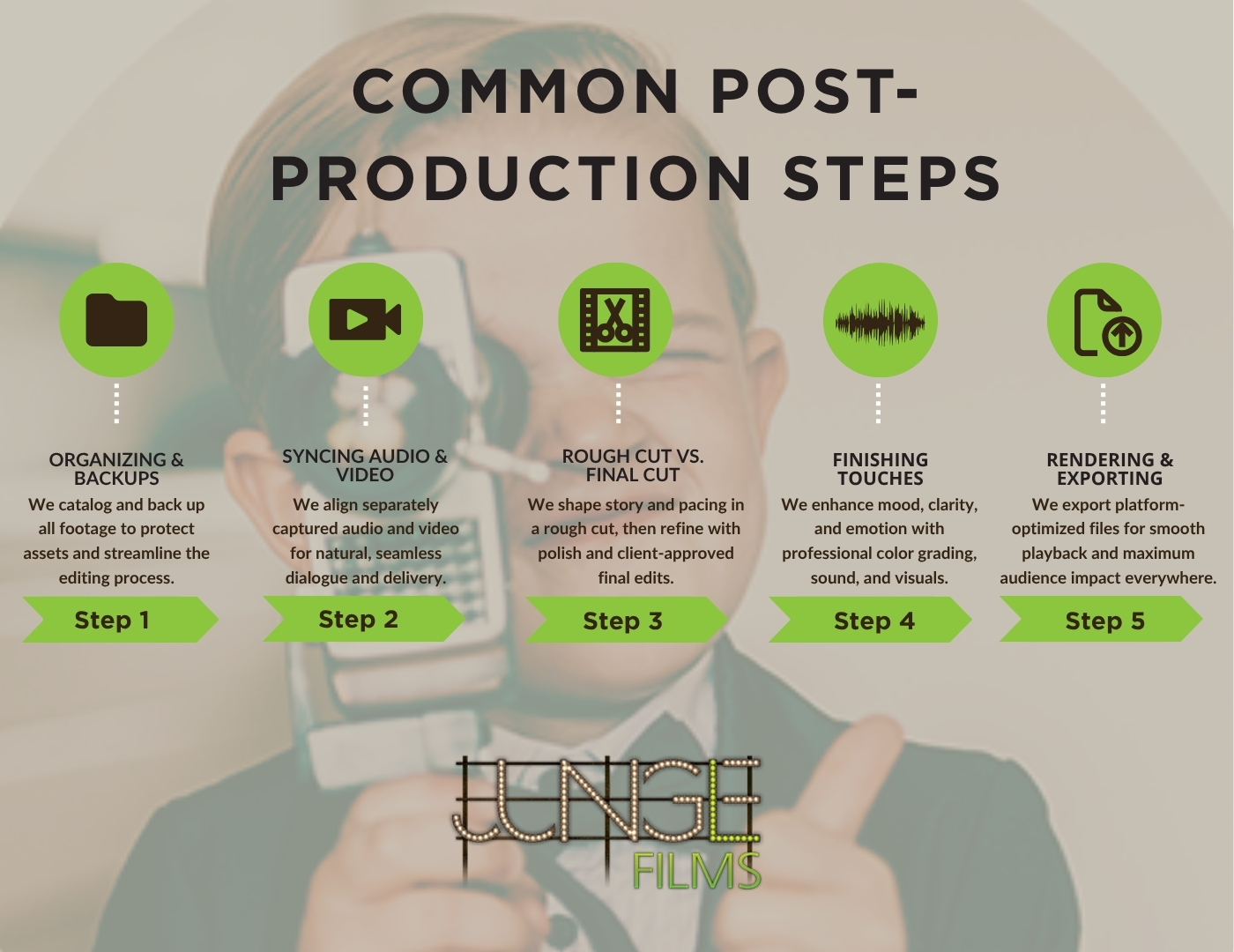
Post-production is not a one-time action, but a carefully sequenced process where every stage builds toward clarity, cohesion, and emotional resonance. Here’s how we bring your message to life, step by step:
Step 1: Organizing and Backing Up Footage
Before anything is cut, we catalog and secure all raw assets.
- This prevents data loss, which can derail a project entirely.
- It also streamlines the editing workflow, making it easier to locate the right shots fast, especially when working with large volumes of footage across multiple cameras or interviews.
Step 2: Syncing Audio & Video
Professional shoots often capture audio separately from visuals.
- Syncing ensures perfect alignment between lip movements and dialogue.
- Jungle Films uses timecodes, slates, or waveform matching to lock every frame into place, so your video feels natural, not stitched.
Step 3: Rough Cut vs. Final Cut
The editing process is structured around milestones:
- Rough Cut: A first draft that focuses on narrative structure. It’s where we test pacing, dialogue flow, and message clarity.
- Final Cut: Includes color grading, sound design, motion graphics, and other polish. It’s client-approved and ready for distribution.
We typically offer two to three rounds of revisions to ensure you’re fully confident in the final product, without dragging timelines or inflating budgets.
Step 4: Color, Sound, Music, and Graphics
This is where the atmosphere is built.
- Color conveys tone, whether it’s hopeful, serious, or celebratory.
- Sound design and music deepen emotional impact and improve retention.
- Graphics ensure clarity and professionalism, especially in testimonial and educational content.
Layering these elements is what transforms a good video into an unforgettable one.
Step 5: Rendering & Exporting
The final stage involves preparing the video for real-world use.
- We tailor deliverables to your needs, whether it’s widescreen for YouTube, square for Instagram, or vertical for TikTok.
- Every export is optimized for resolution, aspect ratio, and playback smoothness, so your message looks and sounds its best, no matter where it lives.
Each of these steps matters because your story deserves to be heard, felt, and remembered.
Why Editing and Post Production Take Time
At first glance, it’s a reasonable question: “If the footage is already shot, why does editing take so long?” The answer comes down to one word: decisions.
The Misconception:
Many assume that faster hardware equals faster editing. But post-production isn’t a mechanical process, it’s creative and strategic. No computer can instantly decide how to tell a story well.
The Reality:
Every minute of raw footage contains dozens of creative possibilities:
- Which quote lands emotionally?
- What b-roll best supports the message?
- How should we pace the reveal of your narrative?
- Where should music swell, or silence speak?
Each of these questions requires thoughtful choices, and they’re all interconnected. Editing is less about “cutting footage” and more about building a structure that flows, convinces, and moves.
The Jungle Films Perspective:
We approach every frame with intention. A single production day can yield content for an entire quarter, but only if the footage is edited with strategic foresight. That means mapping out not just one hero video, but teaser cuts, reels, testimonial segments, and vertical edits tailored to different audiences and platforms.
Yes, editing takes time. But when done right, it gives your campaign time to breathe, long after the cameras have stopped rolling.
Who’s Involved in Post-Production? (Hint: It’s a Team Sport)
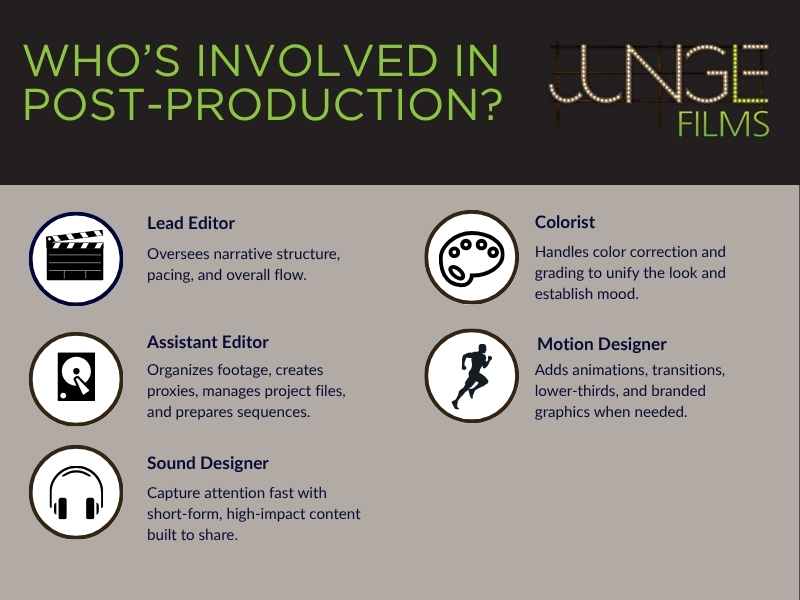
High-impact videos are rarely the result of one person with a laptop, they’re built by a specialized team, each with a distinct role in shaping the final story.
Here’s who you’ll typically find on a post-production team:
- Producer – Oversees the project from start to finish, ensuring creative alignment, timelines, and deliverables stay on track.
- Lead Editor – Shapes the story, refines pacing, and sets the emotional rhythm of the piece.
- Assistant Editor – Manages media organization, syncs footage, builds initial sequences, and supports the lead editor’s workflow.
- Sound Designer – Mixes dialogue, adds sound design and ambiance, balances music, and enhances audio clarity.
- Colorist – Performs color correction and grading to establish visual consistency and elevate mood.
- Motion Designer – Creates custom animations, transitions, and branded graphics to reinforce storytelling and polish the final product.
Each team member contributes to the seamless feel, emotional pull, and polished aesthetic your audience expects, especially for content tied to trust, fundraising, or institutional storytelling.
As a client, you may ask, “Can I just use a phone app for this?”
If you’re making quick social snippets for TikTok or Instagram Stories, maybe. But for mission-critical videos that need to move donors, align stakeholders, or elevate brand credibility? A phone app simply can’t replicate what a skilled team delivers.
How We Work at Jungle Films
We collaborate in real-time with our clients using cloud-based platforms that make it easy to:
- Review drafts
- Share timestamped feedback
- Track revisions
- Keep timelines transparent
Our process keeps you involved, but never overwhelmed. Because when your message matters, the last thing you should feel is out of the loop.
How Post-Production Impacts Budget, Timelines, and Campaign Results
For many clients, post-production feels like a black box, where timelines slip, budgets stretch, and stress peaks. But when managed strategically, post can multiply a project’s impact.
Let’s break it down:
Scope Creep Is Real
One of the most common pitfalls is revisiting messaging during post. Even minor changes to voiceover tone or call-to-action framing can trigger cascading revisions across footage, graphics, and sound.
That’s why Jungle Films scope projects intentionally from the start. We define messaging, audiences, and distribution channels before we shoot, so the edit is sharp, not sprawling.
Timeline Pressure Builds in Post
Post is where everything converges. Final approvals. Internal reviews. Platform-specific formatting. When campaigns are tied to events or fundraising deadlines, timing becomes everything, and post carries the weight of delivering on time.
We build margin into our timelines, communicate clearly, and move quickly when stakes are high. Because a missed launch can mean a missed opportunity.
Retainers Unlock More Value
One of the smartest moves a client can make is structuring post as an ongoing relationship. With Jungle Films’ retention model, we can:
- Create multiple deliverables from one master shoot
- Update campaign assets seasonally or by audience
- Refresh older content without re-filming
This stretches budget and extends relevance without sacrificing quality.
Deliverables by Design
A modern campaign isn’t one video, it’s a system of assets:
- Square for Instagram
- Vertical for TikTok and Reels
- Wide for YouTube or live presentations
- Short teasers for ads
- Subtitled versions for accessibility
The best post teams, ours included, anticipate all of this before editing begins, so your message feels tailor-made, no matter where it shows up.
Post doesn’t just affect your timeline and budget. It determines how long your content works, how well it performs, and how easily it scales.
How to Do Post-Production Right (And Why Jungle Films Is Built for It)
There’s no shortage of ways to cut corners in post-production. But every shortcut comes at a cost, usually to clarity, consistency, or emotional resonance.
Here’s what the wrong approach looks like:
- Rushing through edits to meet artificial deadlines
- Skipping feedback loops and alignment calls
- Outsourcing final cuts to junior freelancers without context
- Prioritizing speed over story
These practices may get a video out the door, but they rarely get results.
What does the right approach look like?
- It starts with strategy, not just software.
- It honors the emotional core of your message.
- It plans for multiple deliverables, not just one.
- It leaves room for revision without derailing timelines.
Post-production is not where a project ends, it’s where your story starts to work. It’s the first moment your message meets your audience, and everything hinges on getting that moment right.
That’s why our process is intentional, intuitive, and impact-first. Jungle Films doesn’t just finish videos, but delivers your messages: shaped with empathy, sharpened with expertise, and delivered with purpose.
Because the right story, told the right way, can inspire action.
Ready to Tell a Story That Moves People?
Still feeling unsure about what post-production really involves? It’s more common than you think. For most clients, it’s the least visible part of the process, but it’s where the magic happens.
Here at Jungle Films, we’ve built our reputation on the moments you feel, not just the ones you see. We layer emotion, clarity, and strategy into every frame, ensuring your story not only look good, but lands with impact.
If your message matters, if it needs to connect, convert, or inspire action, we’d be honored to help shape it.
Frequently Asked Questions About Post-Production
How many rounds of revisions are typical in post-production?
Most professional editors, including Jungle Films’ team, build in 2–3 rounds of revisions. This ensures your voice is heard while keeping the process efficient and on track.
Do I need to attend editing sessions?
No, but you’re welcome to be as involved as you’d like. We use collaborative feedback platforms where you can leave time-stamped notes on cuts, making it easy to guide the vision without being on call.
What’s the difference between raw footage and a final deliverable?
Raw footage is unedited, unpolished video straight from the camera. A final deliverable is color-graded, sound-mixed, formatted, and ready for public viewing, whether that’s on your website, YouTube, or in a pitch meeting.
Can post-production fix mistakes from filming?
To an extent. We can often improve lighting, stabilize shaky shots, or enhance sound, but post is not a substitute for strong production. The best outcomes happen when both stages are thoughtfully executed.
How do I know if my editor understands our brand voice?
Great editors ask the right questions. Jungle Films pays close attention to creative briefs, brand guides, and pre-edit strategy calls to align early, so the tone, pacing, and messaging reflect who you are from the first cut.
Is it possible to request multiple versions of the same video?
Yes, and it’s encouraged. We often create vertical versions for social media, cutdowns for ads, and longer versions for presentations, all from the same shoot.
What happens to the files after the project ends?
We archive all raw footage and project files securely for future updates or re-edits. Many clients come back months later to repurpose existing content for new campaigns.
Do I need to license music for my video?
Yes. We either license music on your behalf or use royalty-free tracks, depending on your needs and budget. Using unlicensed music can result in takedowns or legal issues, so we never cut corners here.
What’s the typical timeline for post-production?
Timelines vary depending on scope, but a standard video project usually takes 2–4 weeks. More complex campaigns with multiple deliverables may take longer. We always clarify this during onboarding.