

Planning a video shoot in NYC? Between permits, traffic, and tight timelines, it’s easy to get overwhelmed. Here’s how to build a smart filming schedule that keeps your production on time, on budget, and aligned with your creative goals, without getting shut down mid-shoot.
New York is every filmmaker’s dream and every producer’s scheduling nightmare. From city permits that shift weekly to unpredictable traffic that kills your call sheet, filming here takes more than vision. It takes strategy.
Jungle Films thrives in NYC. We’ve filmed across boroughs, in parks, on rooftops, and even on subway platforms. We’ve seen what works, and more importantly, what derails even the best-planned shoots. This guide walks you through exactly how to schedule a shoot that works with the city, not against it.
If you’re planning a brand film, testimonial series, or nonprofit campaign, keep reading, because getting the schedule right is what turns a hectic shoot into a cinematic win.
How to Plan a NYC Filming Schedule
Start with Realistic Lead Times
If you’re planning a video shoot in New York City, start early. Really early.
A professional-grade production, especially one involving multiple locations, crew, and permits, should begin scheduling at least 4–6 weeks in advance. Anything less and you’re tempting fate (or worse, city bureaucracy).
Here’s what that timeline needs to include:
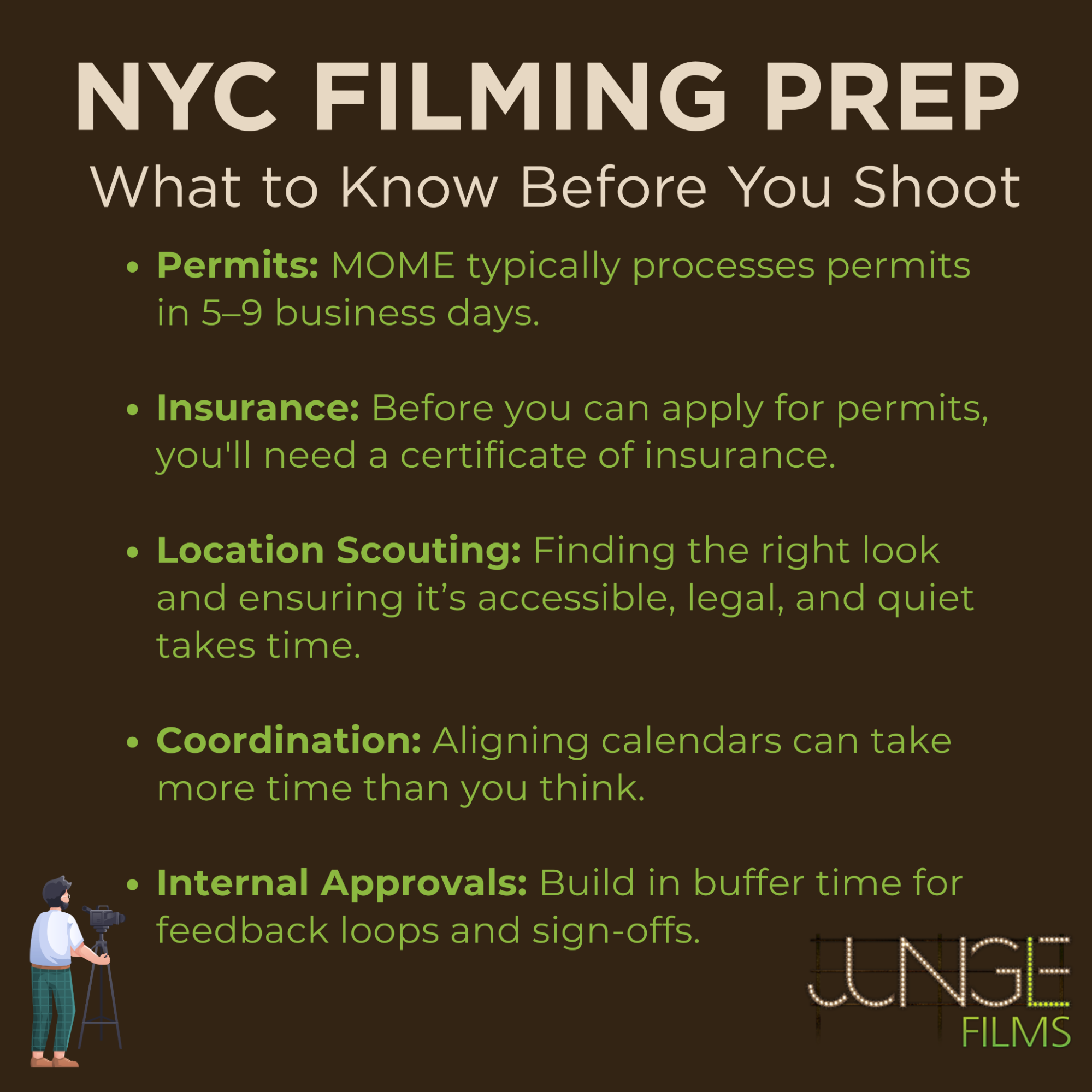
- Permits: MOME typically processes permits in 5–9 business days, but filming in NYC Parks or landmark areas takes longer.
- Insurance: Before you can even apply for permits, you’ll need a certificate of insurance.
- Location Scouting: Finding the right look and ensuring it’s accessible, legal, and quiet takes time.
- Crew & Talent Coordination: Aligning calendars, especially across departments or organizations, can eat up days.
- Internal Approvals: If you’re working with legal teams, brand leads, or nonprofit boards, build in buffer time for feedback loops and sign-offs.
From experience, we’ve seen projects stall not because of the city, but because internal stakeholders underestimate the time needed to prep. Jungle Films often guides clients through this phase to make sure the creative vision is locked before permits are even filed. That’s how we prevent costly last-minute scrambles.
Know When You Do and Don’t Need Permits
In New York City, permits aren’t optional; they’re part of the process. But not every shoot needs one.
You need a permit from the Mayor’s Office of Media and Entertainment (MOME) if:
- You’re using equipment beyond a tripod (e.g., lights, dollies, boom mics)
- You need exclusive use of public space, like sidewalks or streets
- You’re requesting parking privileges for production vehicles
You don’t need a permit if:
- You’re using handheld cameras only
- You’re filming on private property without impacting public access
- Your crew is small and unobtrusive
Still, a word of caution: even legally exempt shoots can get shut down. If a resident or business owner complains, even without merit, NYPD may intervene. We’ve seen this firsthand.
Pro tip: If you’re filming something low-impact on short notice, apply for a “Letter in Lieu” from MOME. It won’t give you location control, but it proves you’re operating legally and can prevent unnecessary disruptions.
Best Times of Day to Shoot (and Why They Matter)
While timing your shoot is essentially about lighting, there are also variables like sound, traffic, and crowd control.
Early morning (7–10 AM)
- Soft, flattering light
- Lighter foot and vehicle traffic
- Fewer construction crews on site
Golden hour (right before sunset)
- Beautiful, cinematic lighting
- Short window, crews need to be set up and rolling on time
- Can draw onlookers, especially in popular areas
Midday (11 AM–3 PM)
- Brightest light, but harsh shadows
- Peak traffic, sirens, and noise, especially in Manhattan
- Active construction zones can make audio nearly unusable
Pro tip: Always scout your location at the exact time you plan to shoot. That’s when you’ll hear what your audio will be dealing with: sirens, subway rumble, delivery trucks, or street performers.
Build in “noise windows”, planned breaks for sound disruptions, to avoid killing momentum during key takes. In NYC, sirens aren’t an “if”, they’re a when.
Weather, Seasons, and Smart Timing

Filming in NYC means working around the city and the climate. Each season brings trade-offs that affect your schedule, your crew’s comfort, and your footage.
Spring (March–May)
- Ideal balance of natural light and workable temps
- Less competition for permits, especially in early spring
- Still unpredictable, always have a rain plan
Summer (June–August)
- Long daylight hours
- High demand for permits and locations
- Heat, crowds, and tourist traffic make shoots more chaotic
Fall (September–November)
- Excellent light and weather
- Stunning visuals in parks and tree-lined streets
- Slightly tighter permit availability due to high demand
Winter (December–February)
- Early sunsets and cold crews
- Challenging gear transport and limited outdoor time
- But: great for controlled indoor shoots and budget-friendly permitting
Many experienced teams aim for February through April, a sweet spot with lower congestion and more flexible scheduling.
We recommend batching seasonal shoots. A spring shoot, planned right, can deliver content that looks fresh across quarters. The key is strategic framing and intentional wardrobe choices, something our producers build into every pre-production plan.
Should You Film in Multiple Boroughs in a Day?
Technically, yes, you can film in multiple boroughs in one day. But in practice? It’s a gamble.
NYC traffic is unpredictable, parking is competitive, and even the best-laid call sheets can unravel between boroughs. What looks doable on Google Maps rarely plays out the same way on shoot day.
Why it’s risky:
- Travel time between locations can double without warning
- Unloading gear in crowded areas burns time and energy
- Parking violations or delays can disrupt your entire schedule
Better approach:
- Focus on one borough per shoot day
- Cluster locations that are walkable or a short drive apart
- Build in extra time for resets and load-ins
Jungle Films often scouts and schedules locations in tight zones, think a 5-block radius in Brooklyn or back-to-back shoots along Central Park West. That’s how we help clients maximize content without wasting half the day in traffic.
Sample NYC Filming Schedule (Based on Real Projects)
A well-run NYC shoot doesn’t just happen but is built minute by minute. Here’s a typical full-day schedule that we’ve refined over years of working across boroughs, weather conditions, and client needs.
Sample Schedule:
- 7:00 AM – Call time/crew arrival
- 8:00 AM – Gear setup, lighting, framing
- 9:00 AM – 12:00 PM – Primary content: interviews, key scenes, scripted segments
- 12:00 PM – 1:00 PM – Crew lunch
- 1:00 PM – 4:30 PM – B-roll, cutaways, alternate locations
- 5:00 PM – Wrap
This structure allows time for resets, unexpected delays, and golden-hour shots if needed.
Jungle Films takes pride in designing schedules that maximize value. One production day can yield 6+ months of usable content, from long-form narratives to short reels, testimonials, and social clips. It’s about planning the shoot for scale.
Hidden Delays and How to Plan for Them
Even the most buttoned-up NYC shoot is vulnerable to surprises. The key isn’t avoiding every disruption, it’s knowing what to expect and planning around it.
Common NYC filming disruptions:
- Sirens, subways, and street noise: These can wreck audio and concentration.
- Last-minute zone changes: Permitted areas can shift or close without notice.
- Unhappy neighbors: Residents or business owners may ask you to stop, even if you’re permitted.
- Equipment theft: Open streets + visible gear = high risk without proper precautions.
Here’s how to stay protected:
- Always carry your permit and backup documents. If police stop you, be respectful and show your paperwork.
- Scout audio and street activity in advance. Sound issues often stem from predictable patterns.
- Plan for weather delays. Jungle Films always builds in flex days or rain dates.
- Designate a gear wrangler. Someone should always be watching the equipment, not only the talent.
By treating risk management as part of the creative process, we ensure your shoot day stays focused, not frantic.
What It Really Costs to Film in NYC

Filming in New York City isn’t cheap, but it’s worth every dollar if the production is well-managed. On top of creative output, the cost of a professional shoot here reflects complex logistics, city permitting, and high-stakes coordination.
Here’s a breakdown of what a typical day might look like:
Base Production Costs:
- $8,000–$15,000 per day: Covers director, producer, crew, camera ops, gear, and basic post-production. Expect the higher end for multi-location shoots or branded content with multiple deliverables.
Permit Fees:
- $300–$500 per 14-day period: Filed with the Mayor’s Office of Media and Entertainment (MOME). This cost varies based on location impact, street closures, or size of your setup.
Insurance:
- $1,000+ per shoot: NYC mandates $1M liability per incident, a non-negotiable for permits. Insurance is often bundled with rental houses like ShareGrid, but read the fine print for coverage gaps.
Location Fees:
- $1,000–$2,000 per hour: Premium venues like Columbia University or The Lotte New York Palace command top rates. Even less iconic locations often require location fees, security deposits, and usage contracts.
Hidden and Support Costs:
- Gear transportation and crew parking
- Portable restrooms or dressing rooms for talent
- Generators or battery power for off-grid locations
- Meals (required by law for shoots over 6 hours)
- Security or production assistants for crowd control
The common mistake?
Trying to cut corners, then paying for it later. We’ve had clients come to Jungle Films after underbudgeted DIY projects went sideways: missed shots, audio disasters, or equipment issues that forced expensive reshoots.
A properly scoped production both protects your budget and increases the ROI of your video. Done right, a single day’s footage can fuel campaigns for months. Done wrong, it’s a lost opportunity.
Faith in Action: How Jungle Films Captured the Fuller Center's Mission on a Tight NYC Schedule
When we filmed for the Fuller Center for Housing of Greater NYC, the mission was to reflect a movement. Volunteers were assembling furniture for formerly homeless veterans stepping into homes of their own. It was foundational. And the logistics of shooting this powerful moment in New York required precision and heart.
Capturing stories like this is why filming in NYC demands trust, clarity, and flexibility. The Fuller Center’s Christ-centered mission guided our approach to documenting this day, and our schedule was built to honor their grassroots ethos.
Choosing the Right Production Partner

Let’s get one thing straight: not all video production companies are built for New York City.
It’s one thing to shoot beautiful footage. It’s another to navigate the five boroughs, coordinate with city agencies, manage on-the-ground surprises, and still deliver a story that moves people.
Here’s what to look for:
- NYC logistics experience: Do they know how to pull a permit, reroute a shoot day, or deal with NYPD on-site?
- Strategic pre-production: Are they planning for approvals, weather delays, and backup locations?
- Narrative depth: Are they crafting a story or just showing up with a camera?
Jungle Films is proudly based in New Jersey. We’re built for the pace of the city and the purpose behind your message, ready to navigate NYC’s complexities while staying grounded in our mission-driven roots.
- We prioritize strategy over spectacle, so your timeline, crew, and goals are always aligned
- We’ve filmed everywhere from Brooklyn rooftops to Midtown boardrooms, and know what actually works
- We design content that lasts; our clients walk away with months of usable footage, not just a day’s highlight reel
Most importantly, we don’t disappear after the shoot. We guide your team through pre, post, and every creative decision in between. Because real impact isn’t only about what ends up on camera, but also how it makes people feel, act, and remember.
Ready to Film in NYC Without the Chaos?
Navigating New York City’s filming scene takes a partner who’s lived it. From securing permits to structuring shoot days that run on time, we help mission-driven brands and organizations tell their stories with clarity and cinematic impact.
Need a crew that gets it? Contact Jungle Films to bring your vision to life!
FAQ
How far in advance should I schedule my NYC shoot?
Start planning 4–6 weeks ahead. This gives you time for permits, insurance, approvals, and location scouting, especially if your organization has internal red tape or layered approvals.
Do I always need a permit to film in NYC?
Not always. Small shoots using only handheld equipment in public may be exempt. But if you’re using lights, gear, or want parking access, you’ll need one from the Mayor’s Office.
What’s the ideal time of day to film in NYC?
Early mornings are ideal for lighting and lower foot traffic. Midday can be crowded and loud. Golden hour looks stunning, but plan for a limited time and backup lighting.
When’s the best time of year to film in NYC?
Spring and fall offer the best mix of lighting, weather, and permit availability. Winter brings early sunsets and cold crews; summer is crowded and hyper-competitive for permits.
Can I shoot in multiple boroughs on the same day?
Possible, but risky. NYC traffic eats hours. Most pros stick to one borough per day and plan locations within walking distance to maximize time on set.
What’s a standard NYC shoot day look like?
7 AM call time, 8 AM setup, 9–12 primary filming, 12–1 lunch, 1–4:30 B-roll and secondary locations, 5 PM wrap. Jungle Films builds in flex time to absorb delays.
What if the weather, police, or neighbors disrupt my shoot?
Always carry printed permits and a “Letter in Lieu” if relevant. Be ready to pause politely, show paperwork, and adapt. Jungle always builds in buffer time and backup options.
How much does it cost to schedule a video shoot in NYC?
Professional shoots typically range $8K–$15K per day. Add gear, permits, crew, and location fees. Planning upfront saves you from expensive surprises or reshoots later.