

Digital video production is the process of planning, filming, editing, and distributing video content using digital technology. It’s how today’s creators, marketers, and educators turn ideas into high-impact videos for social media, websites, campaigns, and more.
Modern video production is about crafting a visual experience that engages, informs, and converts. Whether you’re an entrepreneur, aspiring filmmaker, or marketing pro, understanding the process can save time, money, and creative energy. Here’s what you need to know before you hit record.
If you’re looking to bring your vision to life without the stress, Jungle Films can help, from concept to camera to final cut. We turn creative goals into polished, strategic video assets that resonate with your audience and deliver results.
Want the full breakdown? Keep reading; we’ll walk you through every stage of digital video production, from pre-production strategy to post-production polish (with real-world tips, tools, and examples). Let’s dive in.
What Is Digital Video Production? (Explained Simply)
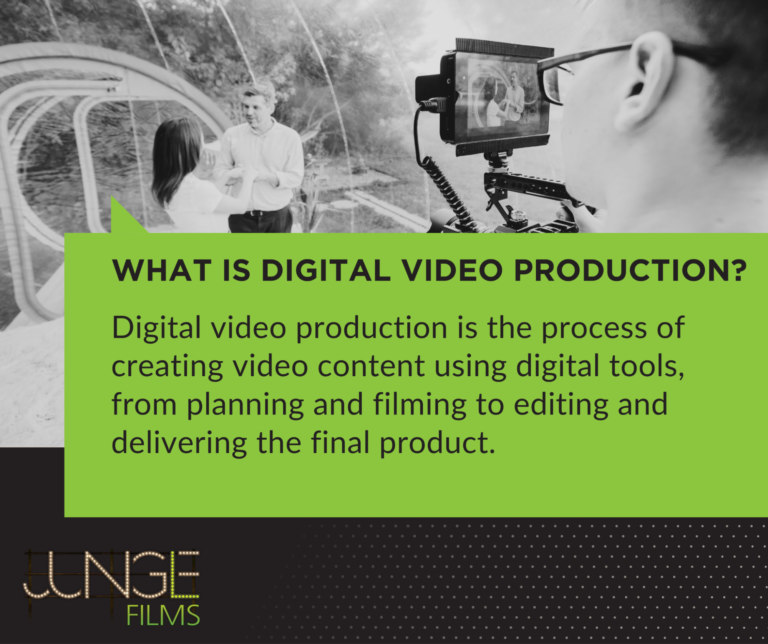
Digital video production is the process of creating video content using digital tools, from planning and filming to editing and delivering the final product.
It’s how today’s creators, marketers, and educators tell stories, build brands, and connect with audiences across platforms like YouTube, Instagram, and TikTok.
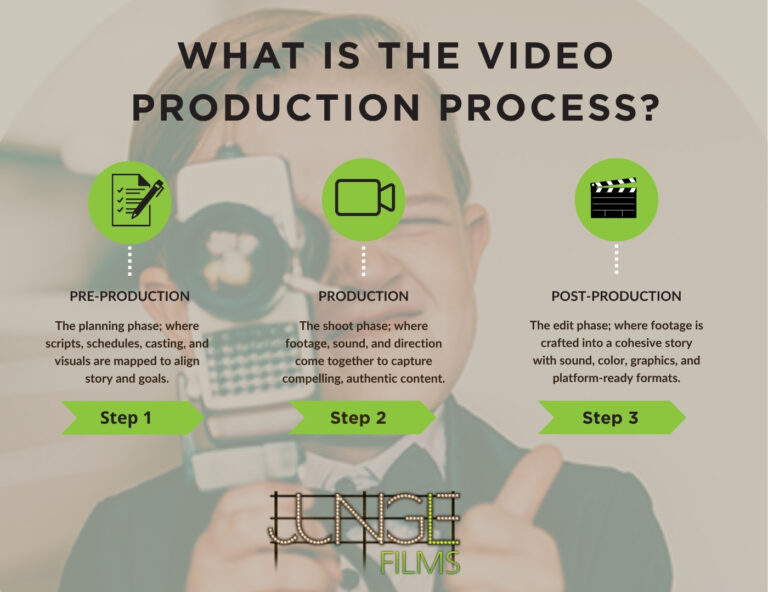
At its core, the process involves three phases:
- Pre-production (planning, scripting, and scheduling)
- Production (capturing footage with digital cameras or smartphones)
- Post-production (editing, adding music, color correction, and exporting the final video).
Whether it’s a 15-second vertical video or a full-length branded documentary, every polished video follows this digital workflow.
If you’re wondering, “So, what is digital video production exactly?”, think of it as modern storytelling powered by pixels instead of film reels.
Worried you don’t know where to start or what gear to use?
You’re not alone. That’s one of the most common beginner frustrations. Fortunately, today’s tools, from iPhones to affordable mirrorless cameras and user-friendly editing software, make it easier than ever to dive in.
A decade ago, producing a professional-quality video required renting expensive gear, hiring a large crew, and editing on specialized systems. But thanks to advancements in digital technology, everything from VHS camcorders to DSLR rigs has been replaced or enhanced by compact 4K cameras, mobile editing apps, and cloud-based collaboration platforms.
In short, digital video production democratized visual storytelling, and it’s never been more accessible.
Why Digital Video Production Matters More Than Ever
In 2025, video isn’t optional, it’s expected. Whether you’re launching a product, telling a brand story, or teaching a concept, digital video is now the default medium audiences prefer to engage with.
Videos increase conversion rates, improve dwell time, and build trust faster than text or static images ever could. And in a world dominated by mobile-first platforms like TikTok, YouTube, and Instagram Reels, it’s video content that drives scroll-stopping engagement.
For today’s organizations and even individuals, video is no longer a luxury, it’s the baseline for visibility. If you’re not producing video content, you’re falling behind in your market.
So, how has it revolutionized the way we create and share content? The answer lies in its accessibility and reach. A small business can now shoot a campaign on a smartphone, edit it in a free app, and reach thousands, if not millions, through strategic distribution. Unlike traditional TV spots or expensive ad buys, digital video is faster, more targeted, and infinitely more measurable.
Digital video gives every brand a voice, every educator a classroom, and every storyteller a stage. That’s why mastering the process, or partnering with the right team to handle it, is more critical now than ever before.
The 3 Stages of Video Production: From Idea to Publish
Creating an effective video doesn’t start with a camera, and it doesn’t end when you hit stop. Every successful digital video project follows a three-stage process: pre-production, production, and post-production. Skipping or underestimating any of these phases can lead to missed opportunities, wasted budgets, and subpar content.
Pre-Production
This is where the magic begins, not with visuals, but with strategy. Pre-production includes everything from scripting and storyboarding to budgeting, casting, and scheduling. It answers critical questions like: Who is this video for? What’s the message? What platforms will it appear on?
Why is pre-production so important?
Because it’s where your creative and logistical foundations are laid. Without it, the project risks losing focus, running over budget, or falling flat creatively.
It’s also where clients often express worry: “I’m afraid of wasting money on bad results.” That fear is valid, but it’s also avoidable. Investing time in pre-production ensures clarity, reduces costly shoot-day surprises, and aligns your vision with measurable goals.
Production
This is the phase where ideas become images. Production involves filming with cameras (digital cinema, DSLRs, or even smartphones), managing lighting and sound, directing talent, and capturing all necessary footage.
Today’s tools make this phase more accessible than ever. iPhones equipped with apps like FiLMiC Pro now offer pro-level control over focus, exposure, and frame rates, empowering small teams or individuals to shoot high-quality video without big-budget gear. That said, professional-grade mirrorless and DSLR cameras remain industry staples for their flexibility and cinematic quality.
Post-Production
Once the footage is captured, the real storytelling begins. Post-production includes importing and organizing clips, editing sequences, adding music and sound effects, color correction, visual effects, and final export for distribution.
What happens during post-production?
Everything that transforms raw footage into a polished, emotionally resonant final product. It’s where rhythm, tone, and narrative truly come to life.
This is also where DIY attempts often fall short. Editing isn’t just about cutting clips. There are also pacing, audio balance, brand alignment, and platform-specific formatting. Tools like Adobe Premiere Pro, Final Cut Pro, and DaVinci Resolve give editors the creative control needed to refine every frame, but they also require skill to use effectively.
Together, these three stages form the backbone of digital video production. When done right, they turn a rough idea into a compelling visual story that resonates, converts, and endures.
Digital vs Traditional Video Production
At a glance, the biggest difference between digital and traditional video production lies in the tools, and the speed. But dig deeper, and the differences affect everything from cost to creative freedom.
So, what’s the main difference?
Traditional video production relies on analog equipment like film reels, physical editing stations, and chemical processing. In contrast, digital production uses electronic cameras, software-based editing, and cloud storage, making it significantly faster, more flexible, and cost-effective.

With traditional production (like 35mm film), you’re limited by physical media: once you shoot, you have to wait for the film to be developed, digitized, and manually edited using splicers or older editing systems. That process is expensive and unforgiving, reshoots aren’t easy, and mistakes are costly.
Digital production flips that script. Shooting on a DSLR or mirrorless camera allows you to review footage instantly, make adjustments on the spot, and back everything up to multiple locations within minutes. Editors can jump into programs like Adobe Premiere or DaVinci Resolve immediately, cutting timelines from weeks to days or even hours.
And it’s not just about speed. Digital workflows allow you to shoot in higher resolutions, apply real-time effects, and tailor content to different formats, like vertical for TikTok or widescreen for YouTube, with ease.
Bottom line: Traditional methods may still be used for artistic or high-budget cinematic projects, but for 99% of today’s content needs, especially in marketing, education, and social media, digital production is the standard. It’s faster, cheaper, and puts professional-quality video within reach for anyone with a camera and a plan
Where Digital Video Shows Up in the Real World
Digital video isn’t confined to Hollywood sets or YouTube vlogs. It’s woven into the fabric of our daily lives, shaping how we market, learn, and connect, often without us even realizing it. Its flexibility across industries and platforms is what makes it such a powerful medium.
Marketing
Businesses of all sizes are leveraging video to boost brand visibility, convert leads, and humanize their message. From polished brand story films to scrappy, authentic Instagram Reels, video is the most engaging format in digital marketing today.
Explainer videos, product demos, and testimonial reels all fall under this umbrella, each crafted to move potential customers from curiosity to action. Short-form social ads, often just 15–30 seconds long, can deliver an outsized impact when well-executed.
Education
Whether it’s a full online course or a 90-second microlearning module, video brings education to life. Institutions and instructors use it to explain concepts visually, demonstrate processes, and boost retention through audio-visual learning.
Educators also benefit from evergreen content: a well-made lecture video can be reused, scaled, and delivered globally at no additional cost.
Social Media
Platforms like TikTok, Instagram Reels, and YouTube Shorts have turned short-form video into a daily content language. These bite-sized clips are optimized for vertical viewing, fast-paced storytelling, and trend-driven creativity.
Real-World Example: Jungle Films recently partnered with a nonprofit to produce a documentary-style short film aimed at increasing donor engagement. By focusing on authentic storytelling and visual emotion, the video not only educated viewers on the mission but drove a measurable spike in donations and recurring supporter interest.
Whether you’re teaching, selling, or storytelling, digital video is now the standard format for reaching your audience. It’s flexible enough to serve diverse goals, and powerful enough to make them stick.
How to Start Your First Digital Video Project
If you’re new to video production, you might be asking: “How do I get started with a video project?” The truth is, the hardest part is often knowing where to begin, and many first-time creators get overwhelmed before they even pick up a camera.
Start by deciding whether this is a DIY effort or something better handled by professionals. If your goal is casual content for social media and you’re comfortable experimenting, a DIY approach using a smartphone and basic editing software might work. But if you’re creating something meant to represent your brand or drive business results, working with a video production team ensures quality, consistency, and strategy.
But it’s too intimidating; there’s too much jargon.
That’s totally normal. Terms like “b-roll,” “frame rate,” or “color grading” can feel overwhelming at first. But remember, video is just storytelling with moving images, and once you focus on your message, the rest becomes manageable.
Next, define your purpose and audience. Ask yourself:
- Who am I speaking to?
- What action do I want them to take?
- Where will they see this video, Instagram, YouTube, your website?
Planning around these answers ensures your content is not only well-executed but also effective.
One of the most common rookie mistakes is skipping pre-production.
Jumping straight into shooting without a script, shot list, or strategy leads to extra costs, wasted time, and disappointing results. Even a simple bullet-point outline or mood board can provide the clarity needed to keep your video focused and engaging.
By starting with a clear plan, whether solo or with a creative partner, you’ll reduce overwhelm, save money, and end up with a final product you’re actually proud to share.
Budgeting, Timelines, and Expectations
So, what should you expect in terms of cost and timelines?
It’s a smart question, but also one that’s often misunderstood. The truth is, video production can scale to fit a wide range of budgets and project scopes, but the key to getting the most from your investment lies in planning with purpose.
Let’s talk timelines first. A simple video, such as a customer testimonial, a founder story, or a short social media ad, can typically be turned around in about 2 weeks if the concept and logistics are clear. On the other hand, larger, more complex projects like branded mini-documentaries or multi-video ad campaigns may take 4–8 weeks from kickoff to delivery, factoring in scripting, scheduling, production days, and post-production cycles.
When it comes to budget, the range can be just as broad. DIY projects might cost a few hundred dollars in time, gear, and effort. Professional productions, depending on the length, complexity, and distribution goals, can run anywhere from $3,000 to $50,000 or more. But this doesn’t mean you need a massive studio or Hollywood-sized crew to get professional results.
In fact, one of the most cost-efficient strategies is knowing how to stretch a single shoot into multiple assets. With smart planning, even a 6-hour shoot can yield six months of marketing content, including interviews, product demos, social cutdowns, behind-the-scenes footage, and more. It’s not just about producing a single video; it’s about creating a content engine that works across formats, audiences, and platforms.
Probably you’re thinking, “I can’t afford a big studio, but I still want pro results”.
Rest assured, many clients have experienced that tension, too. The good news? You don’t need a huge budget to create high-impact video. What matters most is having a clear objective, a focused message, and working with the right creative partner, someone who can translate your goals into polished visuals while working within your means.
By setting realistic expectations and building your project around value, not just vanity, you’ll get far more from your video production and ensure it continues delivering ROI long after the shoot wraps.
Avoiding Common Pitfalls in Video Production
Creating an effective video is not only about hitting record but about being intentional. One of the biggest mistakes new creators make is adopting the “just press record” mindset. Without a plan, even the best-looking footage can fall flat. Skipping steps like scripting, storyboarding, or knowing your audience often leads to videos that feel directionless and fail to connect.
Another major roadblock is jargon confusion. Terms like resolution, frame rate, and aspect ratio get thrown around a lot, but not everyone knows what they mean or why they matter. For example, a video meant for Instagram Reels should be formatted vertically (9:16), while YouTube generally favors horizontal (16:9). Misunderstanding these details can result in awkward cropping, poor playback quality, or videos that don’t perform well on their intended platforms.
Here’s a pro tip: Always plan your content with its destination in mind. For mobile-first platforms like TikTok and Instagram, vertical video is simply expected. Designing for the format from the start ensures your message lands exactly where and how it should.
One commonly overlooked, but absolutely critical, element is sound. You can have beautiful visuals, but if your audio is echoey, distorted, or muffled, viewers will tune out fast. In fact, audio issues are the number one reason viewers abandon videos early. Investing in clear voice capture, background noise control, and well-mixed music is just as important as lighting or composition.
Avoiding these pitfalls doesn’t require perfection, it just requires awareness. By taking the time to plan intentionally, understand the technical basics, and prioritize audio as much as visuals, you’ll be miles ahead of most first-time creators, and far more likely to produce videos that resonate and perform.
How to Choose a Video Production Partner (And Why It Matters)

If you’ve decided to work with a professional video team, you’re already on the right track. But here’s the truth: not all video production partners are created equal. Some show up with a camera and shoot what you tell them. Others partner with you strategically, guiding the message, shaping the story, and aligning the video with your business goals.
So, “Are all marketing agencies and brand storytelling providers the same?”
Absolutely not. And the difference shows not just in the final video, but in the entire experience of getting there.
Before you choose a partner, ask the right questions:
- Do they understand storytelling or just cinematography?
- Will they help shape the message, or expect you to hand them a script?
- Can they help with pre-production strategy, scripting, and content planning?
- Do they know your audience and how to speak to them visually and emotionally?
You’re not just hiring someone to operate a camera, you’re hiring a creative process. A good production company becomes an extension of your team, bringing clarity, direction, and execution to ideas that might otherwise remain stuck in a brainstorm doc.
Remember, as a client, you are not solely looking for equipment, you want results. Look for a partner who can take their loose idea and turn it into a video that drives engagement, conversion, or education. Look for someone who’s been there, who knows the traps to avoid, and who makes the process enjoyable and efficient.
The right partner won’t just shoot your video. Instead, they’ll listen, collaborate, and elevate your message. And when they do, your video will feel less like content… and more like impact.
Why Jungle Films Is Built for Results (Not Just Pretty Videos)
Jungle Films believes video should work hard for your brand, and not the other way around. That’s why we handle the entire process in-house: from creative strategy and scripting to full-scale production and editing. No outsourcing, no fragmented communication, just a seamless path from concept to content.
We’re not here to simply “make videos.” We’re here to ask better questions, push creative boundaries, and deliver work that feels as good as it performs. Whether you’re looking to produce a series of TikTok ads, a product explainer, or a documentary-style brand film, we tailor every project to match your voice, goals, and audience.
Clients don’t just come to Jungle Films for the final deliverables; they stay because of the ease, clarity, and confidence they feel throughout the process. We break down the jargon, handle the heavy lifting, and keep your message front and center.
Our team combines artistic vision with strategic execution, ensuring every frame has purpose. That’s how we help founders raise funding, nonprofits drive donations, and startups tell bold stories that break through the noise.
Ready to make your vision real?
Let’s create something that not only looks beautiful but also delivers results.
FAQ
Is digital video production the same as traditional filmmaking?
Not exactly. Traditional filmmaking often uses film reels, analog equipment, and longer production timelines. Digital production relies on digital cameras, modern editing tools, and faster workflows, making it more accessible, scalable, and cost-effective.
Do I need a big budget to make a professional video?
No. With smart planning, even modest budgets can produce high-impact content. A single, well-organized shoot can yield months of usable assets. The key is focusing on message, audience, and distribution, not just aesthetics.
How long does it take to complete a video project?
It depends on the scope. Simple videos can be completed in about 2 weeks. More complex projects with scripting, multi-day shoots, and advanced editing may take 4–8 weeks or more.
What’s the difference between pre-production, production, and post-production?
- Pre-production is the planning phase, including scripting, scheduling, and budgeting.
- Production is the actual filming process.
- Post-production includes editing, color grading, sound design, and exporting the final product.
Can I shoot high-quality video with an iPhone?
Yes. With apps like FiLMiC Pro and a good lighting/audio setup, iPhones can produce stunning content. However, for more complex needs, professional equipment and crew are still recommended.
Why is audio so important in video production?
Viewers are more likely to tolerate poor visuals than bad sound. Clear dialogue, clean background noise, and balanced audio significantly improve viewer retention and perceived quality.
How do I know if I should hire a video production company or do it myself?
If your video is casual, personal, or experimental, DIY may work. But if it represents your brand, educates an audience, or supports a campaign, partnering with a professional ensures strategic, polished results.
What should I look for in a video production partner?
Look for a team that goes beyond just filming. They should help with messaging, pre-production strategy, storytelling, and content distribution. A good partner understands both creative and business goals.
How can Jungle Films help with my video needs?
Jungle Films offers full-service video production, from creative planning to final editing. We focus on storytelling, strategy, and execution to deliver videos that don’t just look good, but perform.